AT&T
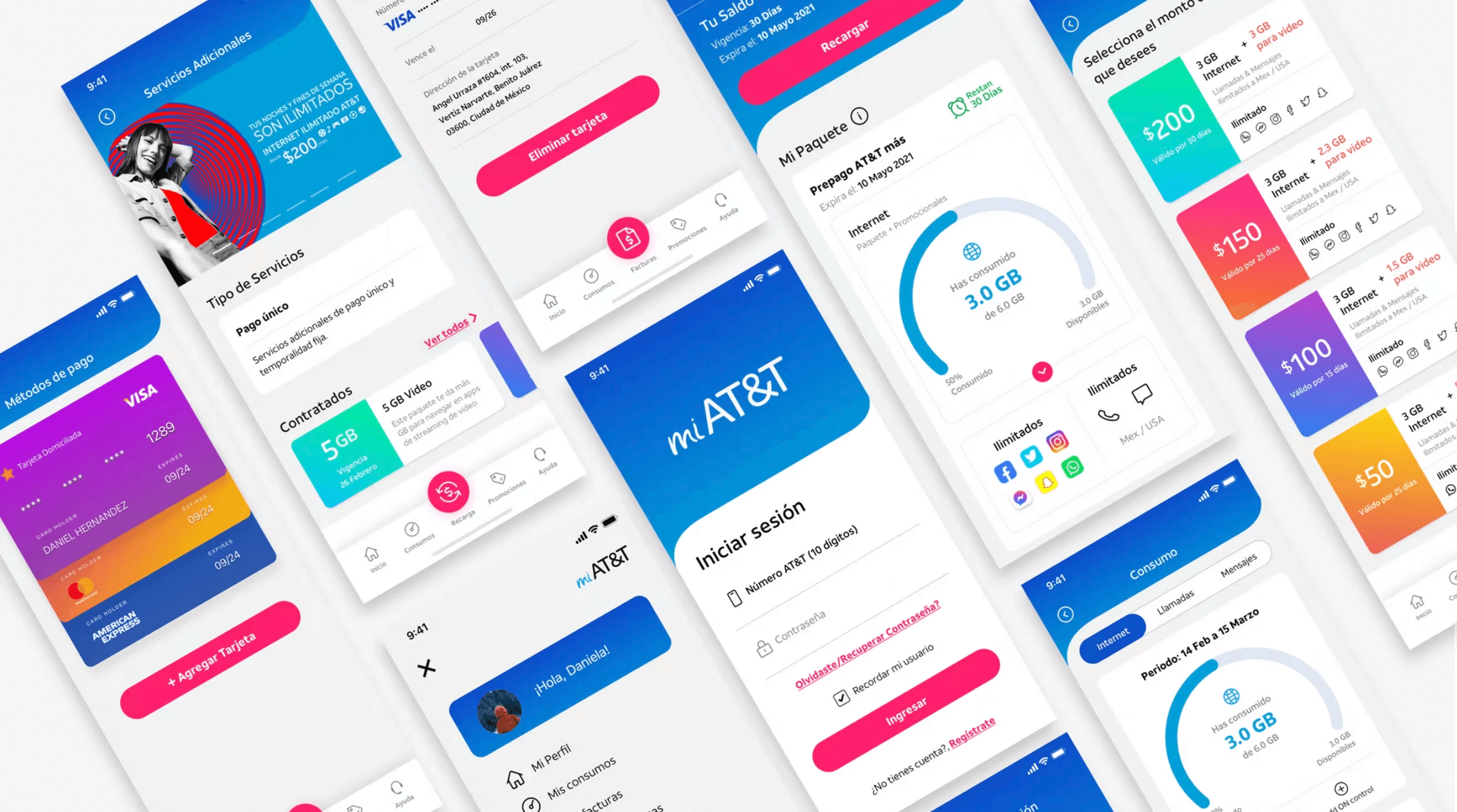
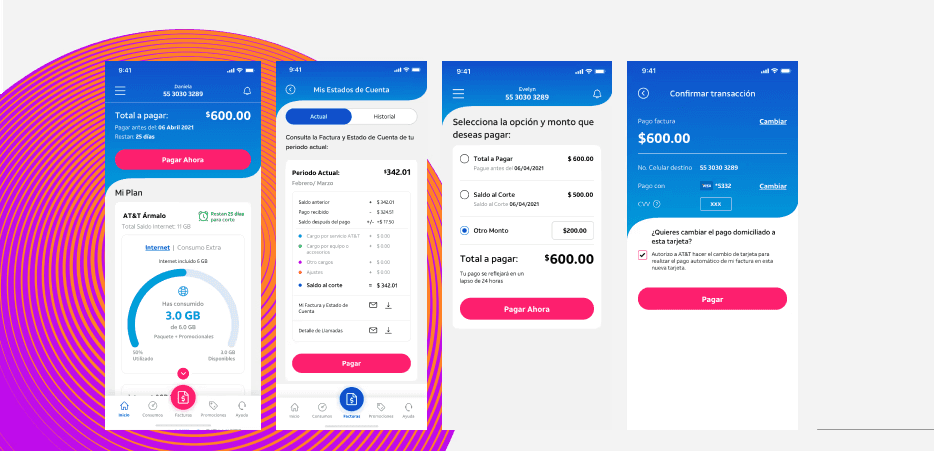
The project scope of work involved requirements analysis, UI/UX design, iOS and android development.
The scope included the creation of an application that would provide a solution to the current mobile telephony needs of one of the most important global communications companies: AT&T, in its different commercial offers.
The Problem
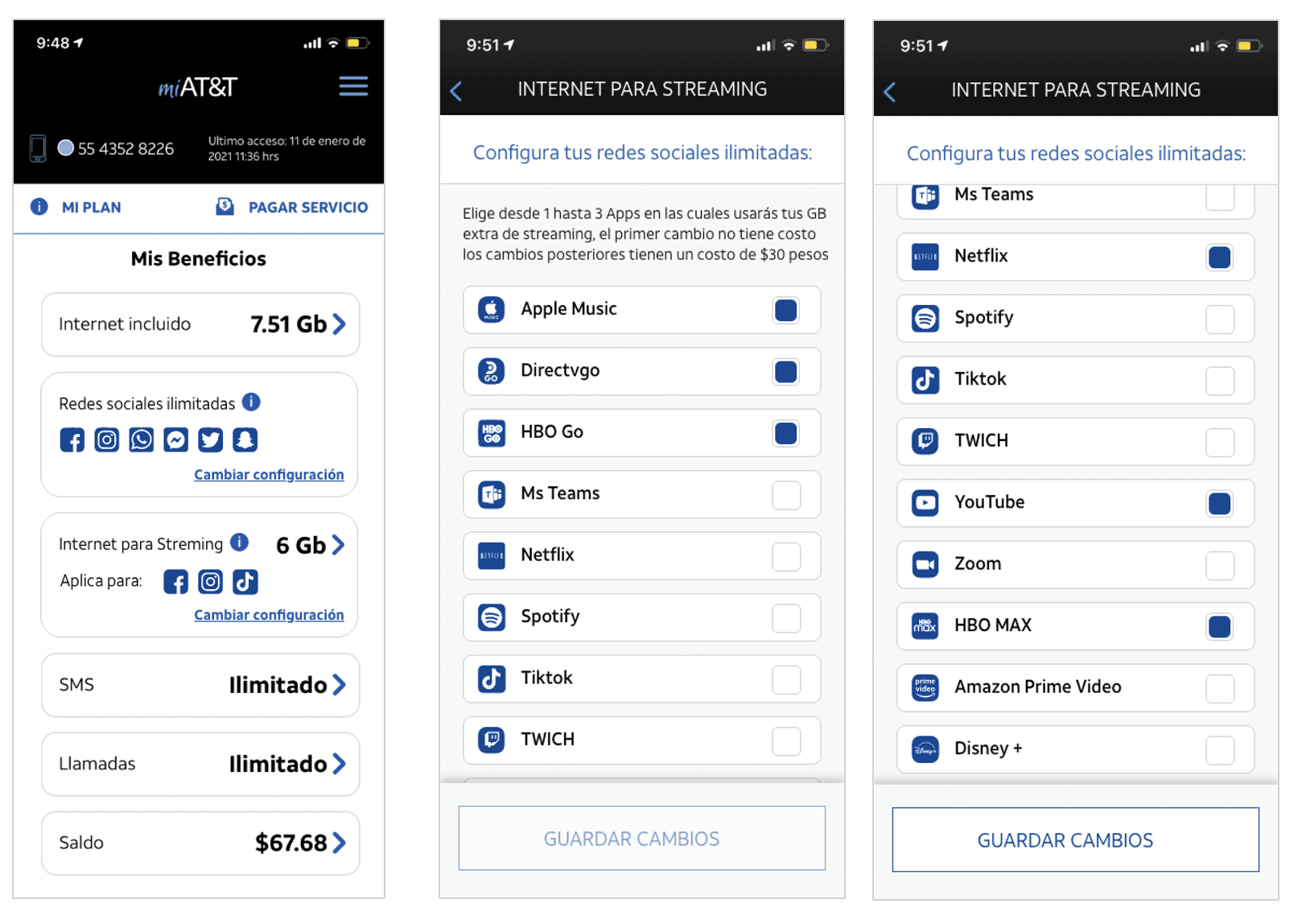
AT&T’s digital ecosystem supports a wide range of customer needs, from checking account information and managing services to exploring offers, paying bills, and accessing support. Because of this complexity, the experience needed a stronger structure that could help users find key actions faster and navigate the platform with more confidence.
The main challenge was to simplify a dense telecom experience without removing the depth required by the business. The redesign needed to improve usability, create stronger visual hierarchy, and establish a consistent interface across app and web.
Key pain points identified
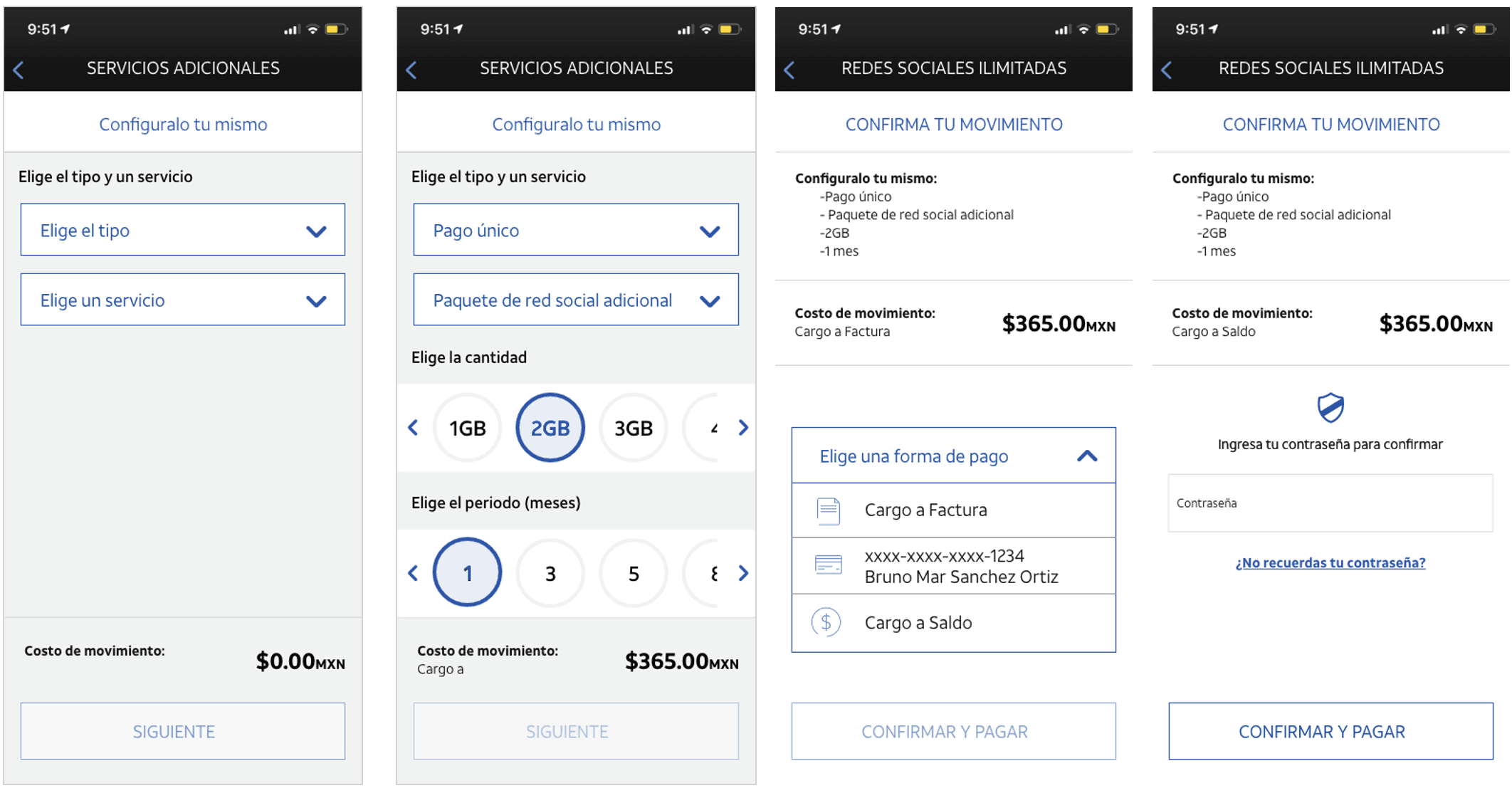
Users needed faster access to essential account actions.
Information hierarchy felt heavy and difficult to scan.
Navigation required clearer grouping and prioritization.
App and web experiences needed stronger visual consistency.
The interface needed a more scalable system to support future features and services.
UX Strategy
The UX strategy was built around reducing friction and making essential actions easier to find, understand, and complete. Core flows were restructured to improve discoverability, guide users through complex information, and create a more predictable interaction model across the app and web experience. The goal was to make the platform feel simpler, faster, and more useful without losing the depth required by a telecom ecosystem.
Wireframes and Prototyping
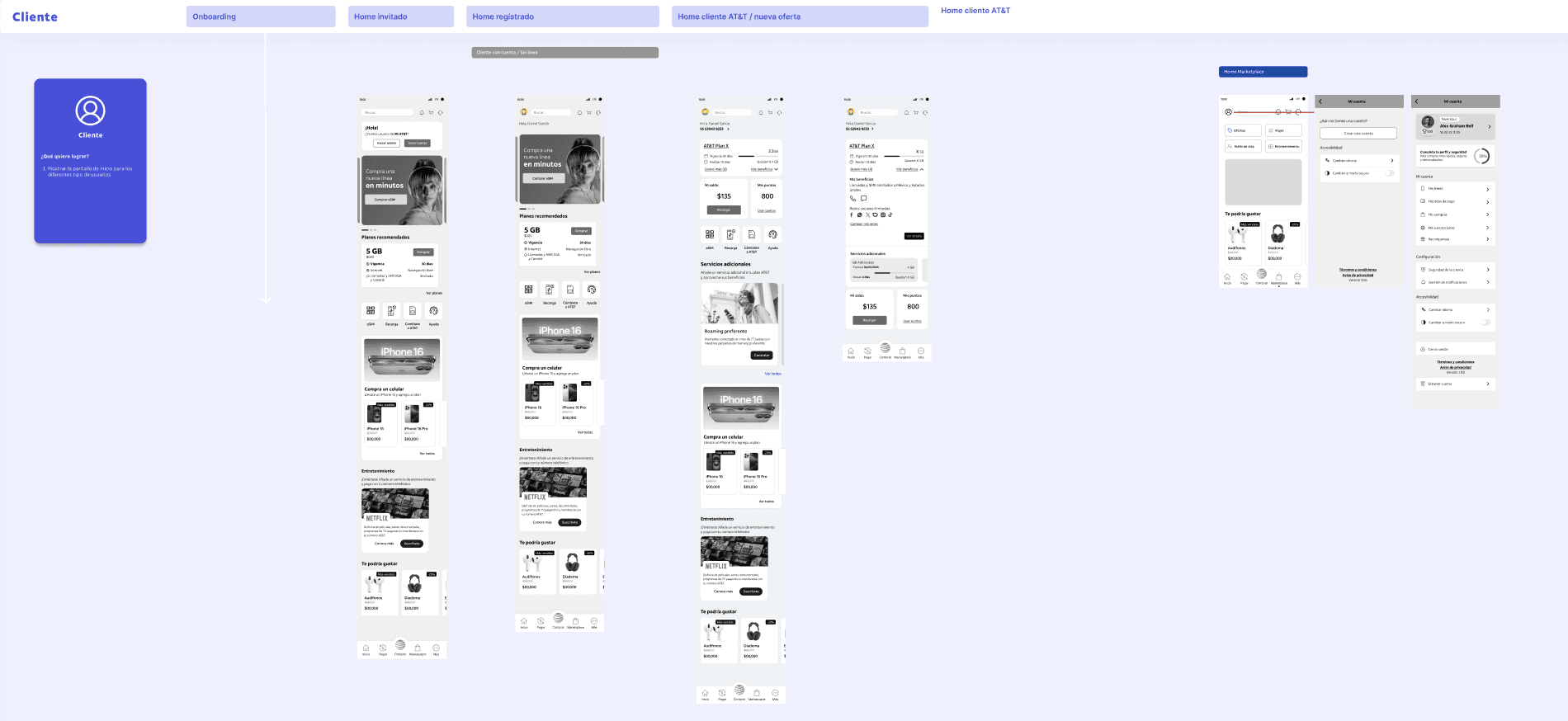
The wireframing phase focused on defining structure before visual polish. Low and mid-fidelity wireframes were used to explore layout hierarchy, navigation logic, content grouping, and responsive behavior.
Once the main structure was defined, the design evolved into high-fidelity prototypes that demonstrated the experience across mobile, tablet, and desktop. This allowed key flows to be reviewed as realistic product journeys rather than isolated screens.
UI Design
The UI direction focused on creating a cleaner, more modern, and product-led visual system while maintaining AT&T’s brand familiarity. The interface was designed to feel more premium, easier to scan, and more consistent across touchpoints.
The design system approach helped establish reusable patterns for cards, buttons, navigation, icons, content modules, spacing, typography, and responsive layouts.